
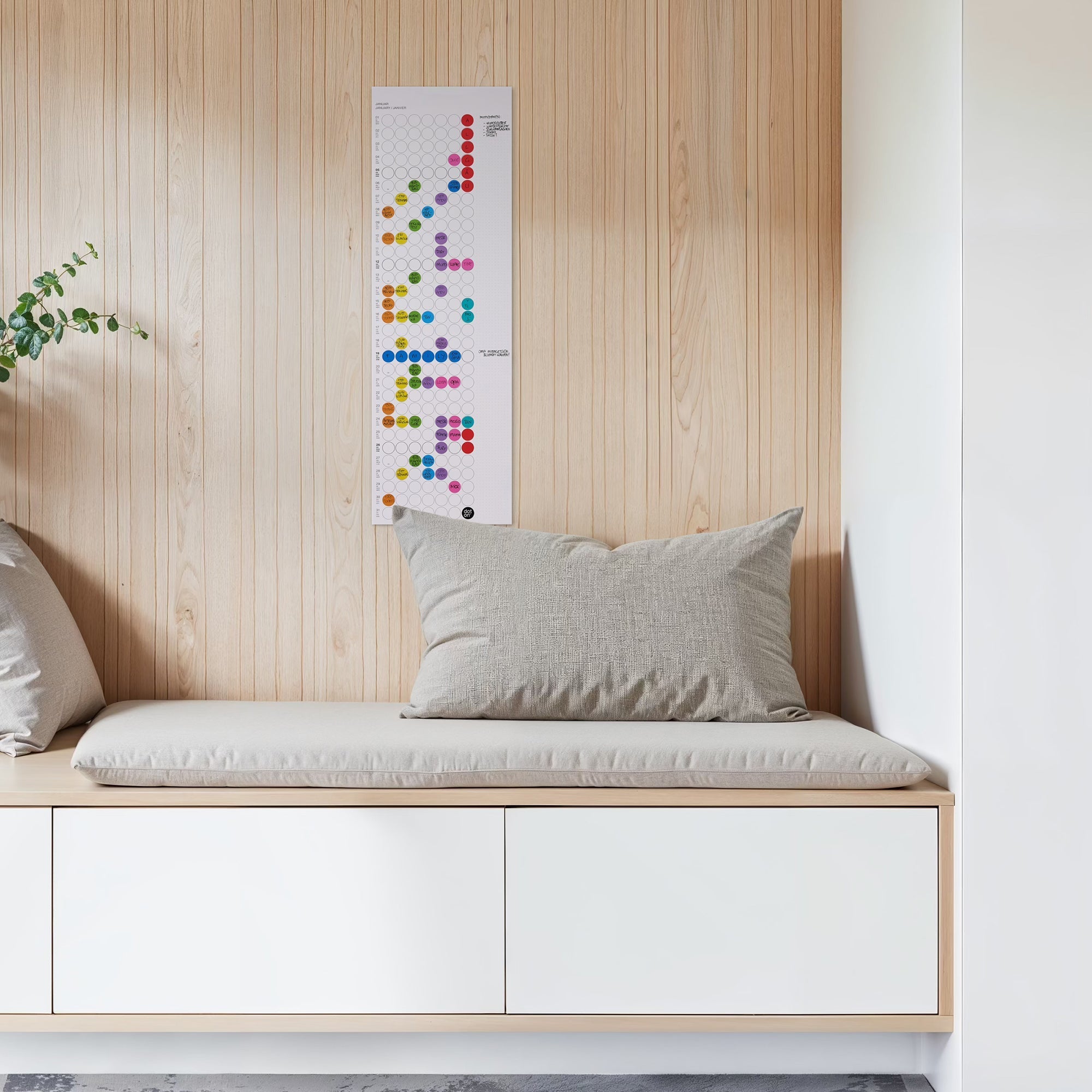
Why we only understand time when we see it...
Or: How visual planning provides orientation for children, adults, and teams
Time is abstract. You can't touch it, you can't hold onto it – and yet it determines our everyday lives.
That's precisely why many people find it difficult to realistically estimate, plan, or understand time. The solution: Make time visible.
Why time without visualization overwhelms
Calendar dates alone don't tell the whole story.
Orientation only arises when time periods become visible – as areas, colors, or points.
This applies to:
-
Children
-
Adult
-
Teams
-
Families

Children need visual time
Children don't think in weeks or months – they think in pictures.
A colorful dot on the calendar says more than any time.
This is how children understand:
-
when something happens
-
how long something takes
-
what they can look forward to
Adults benefit just as much
Even adults quickly lose track without visualization:
-
Deadlines take effect "eventually".
-
Breaks are forgotten
-
Time feels scarce
A visual calendar shows:
-
where time is concentrated
-
where air is created
-
where breaks can be deliberately planned
Visible time = malleable time
What is visible can be shaped.
What is designed feels controllable.
And that's exactly what creates peace.
Conclusion:
Time doesn't decrease –
But it becomes more understandable when we see it.
And understanding creates serenity.


