
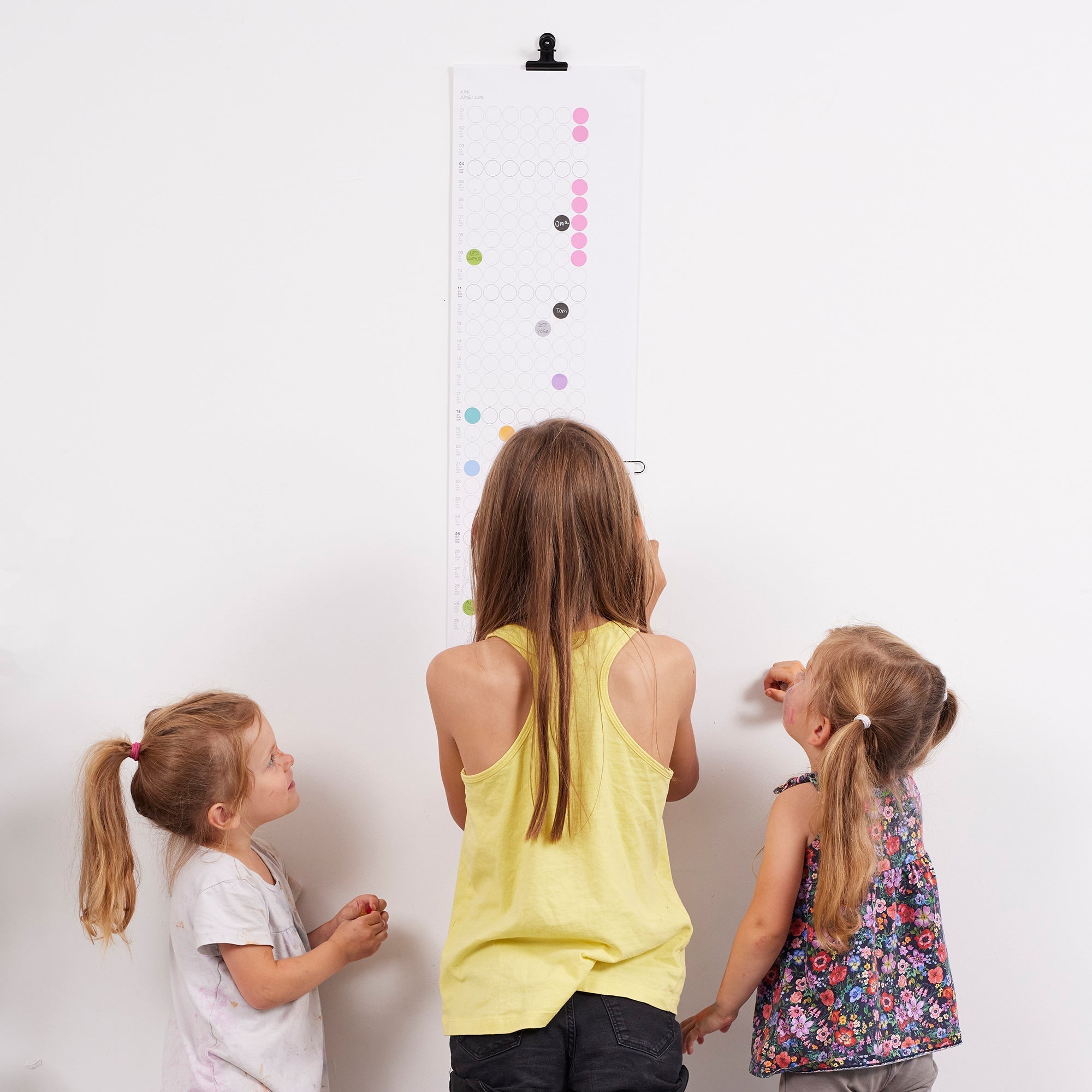
How Responsibility Develops Early – Without Pressure
Why Joint Planning Empowers Children and Doesn't Overwhelm Them
Many parents wish for their children to take on responsibility.
But often, a concern comes with it:
Isn't it too early? Won't that put my child under pressure?
The answer is: No – if planning is understood correctly.
Because children learn responsibility not through control, but through participation.
And this is precisely where joint planning can play a quiet but very effective role.
Responsibility begins not with duties, but with understanding
Children don't take responsibility because they "have to."
But because they understand what it's about.
If planning only takes place in the adults' heads, children often experience everyday life as something that happens.
If planning becomes visible and collaborative, they experience everyday life as something that is shaped.
That is a crucial difference.
Learning to plan means: recognizing connections
Children who are involved in planning learn, incidentally:
-
that time is limited
-
that things have sequences
-
that decisions have consequences
-
that breaks are part of it
Not theoretically – but very practically.
A visible plan shows:
First school, then leisure.
First appointment, then break.
Not everything fits into every day.
This promotes understanding – not pressure.
Why visual planning is particularly child-friendly
Children don't think abstractly.
They think visually.
A colorful, clear plan:
-
translates time into images
-
makes processes tangible
-
reduces explanations
Colors help children to orient themselves:
-
one color for themselves
-
one for school
-
one for leisure
This makes planning understandable – without reading, without calculating, without overwhelming.
Joint planning does not mean: deciding everything themselves
An important point:
Children don't have to plan everything to learn responsibility.
It's enough if they:
-
are allowed to co-decide
-
see their appointments
-
design small areas themselves
For example:
-
their leisure activities
-
appointments
-
small tasks
This conveys:
I am part of the whole.
My time matters.
Why this doesn't create pressure
Pressure arises when:
-
expectations are too high
-
mistakes are not allowed
-
everything has to be done "right"
Good planning for children is the opposite:
-
flexible
-
changeable
-
playful
A plan can be adjusted.
Items can be moved.
Days can remain empty.
This is how children learn:
Responsibility doesn't mean perfection.
Responsibility means thinking along.
Planning as a practice space for life
When children learn early how planning works, they develop important skills:
-
sense of time
-
priorities
-
self-organization
-
frustration tolerance
-
realistic assessment
And all this without performance pressure –
because planning is part of everyday life, not part of an evaluation.
Why planning also provides emotional security
Children feel safer when they know:
-
what's coming
-
when something will happen
-
what they can expect
A visible plan is particularly helpful:
-
during transitions
-
during changes
-
in stressful phases
Planning thus becomes not control,
but orientation.
Important: Children need freedom – even in the plan
Learning to plan doesn't mean planning everything.
Children benefit when they see:
-
empty spaces
-
unplanned time
-
breaks
Because that too is an important message:
Not everything has to be filled to be good.
Conclusion: Responsibility grows quietly – when children are allowed to co-plan
Children do not learn responsibility through pressure.
They learn it through participation, visibility, and trust.
When they learn to plan:
-
they understand their everyday life better
-
they feel taken seriously
-
they develop self-efficacy
-
and naturally grow into responsibility
Not because they have to.
But because they are allowed to.
Would you like to gently involve your child in planning?
A visual, family-friendly calendar helps to
make time understandable – and let responsibility grow playfully.


