
...especially in uncertain times
How clarity, structure, and small rituals create stability in everyday life
Uncertain times often feel the same – regardless of what triggers them.
News is coming thick and fast, plans are changing, certainties are crumbling.
And suddenly this feeling arises: I no longer know what's coming.
It is precisely in such moments that planning does not feel like control –
but like something completely different: security .
Not the certainty that everything will be alright.
But the reassurance that you don't have to carry everything in your head alone .
Uncertainty arises when there is a lack of orientation.
Humans can cope with change.
What we struggle with is lack of clarity .
If:
-
Dates are uncertain
-
Routines are broken
-
days feel the same
-
Decisions constantly need to be made anew.
… stress arises. Not because too much is happening –
but because nothing is tangible anymore.
Planning provides a stop right here.
Planning does not mean control – it means structure.
A common misconception is:
Planning = deciding everything.
In reality, planning means:
-
create a framework
-
Making things visible
-
to give form to the day
Especially in uncertain times, this form helps to avoid drifting.
It gives shape to everyday life – even when content changes.
Why visibility is calming
We can categorize what we see.
Things we can categorize feel less threatening.
A visible plan:
-
shows what is certain
-
shows what is open
-
shows where air remains
That alone can have a calming effect –
because uncertainty is given a place.
Routines provide stability when everything else is faltering.
In uncertain times, many people lose their familiar routines.
That's precisely why small rituals become so important.
For example:
-
consciously plan the week
-
Color-code appointments
-
Enter break times visibly
These rituals are no small matter.
They are an anchor.
You say:
Here is something that will last.
Planning reduces decision stress
Uncertainty often means having to constantly make new decisions.
-
Can I do that?
-
Do I need to postpone this?
-
Do I have time for that?
Planning anticipates some of these decisions.
Not definitive – but providing some guidance.
That takes the pressure off your head.
And relief creates security.
Why colors play a special role
Colors do more than just structure appointments –
They structure perception.
Colors help in uncertain times:
-
to separate living areas
-
Important points to highlight
-
Making overwhelm visible
One glance is enough to know:
Where am I right now?
This clarity has a stabilizing effect.
Planning as self-care
In uncertain times, many people think of others first.
Family, work, responsibility.
Planning can be an act of self-care here:
-
Make breaks visible
-
Take time for yourself seriously
-
Draw borders
Not everything can be planned –
But some things may be deliberately protected.
Security is not achieved through prediction, but through preparation.
Planning offers no guarantee.
It does not prevent crises.
It doesn't undo anything.
But she gives:
-
overview
-
structure
-
Scope for action
And that's exactly what people need when the world becomes confusing.
Conclusion: Planning provides stability, not because it knows everything – but because it sustains.
In uncertain times, we don't need perfect plans.
We need guidance .
Planning provides this orientation:
-
by making thoughts visible
-
by structuring days
-
by making us feel not helpless
It is not a promise that everything will be alright.
But it is a silent promise to ourselves:
I'm taking care of myself – step by step.
Do you want to create more stability in your everyday life?
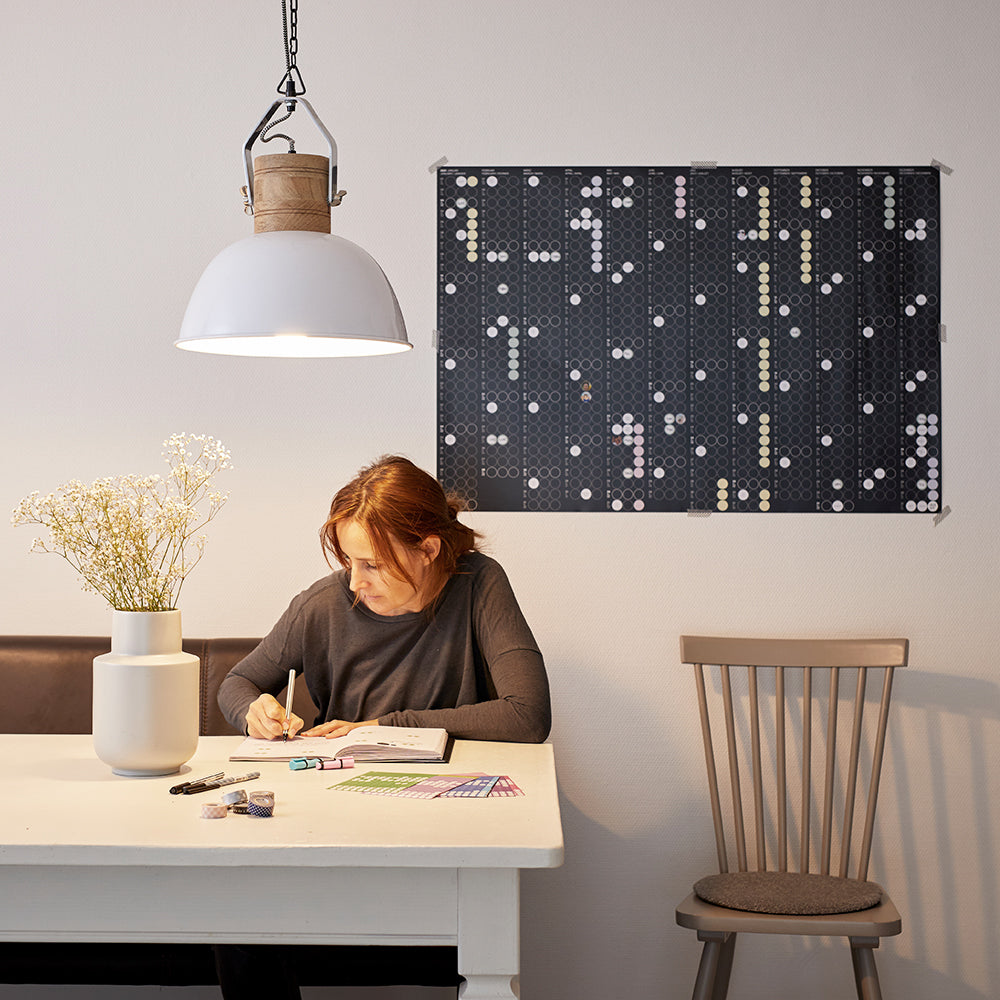
A visible, color-coded calendar can help you,
To bring structure, overview, and small islands of security into your everyday life –
even when many things in the outside world are uncertain.


