

... and how to do it better!
The most common mistakes – and how you can finally plan more relaxedly
Planning sounds so simple:
Open your calendar, enter appointments, note down to-dos – done.
And yet, many experience the exact opposite:
- The calendar is full
- the to-do list grows
- the stress remains
- and in the end, everything feels like "too much"
The problem is not that we don't plan.
The problem is how we plan.
Why planning often creates more stress than it solves
Many people plan with one goal: to fit in as much as possible
But that's precisely what turns planning into a stress amplifier.
Because:
- every free slot is filled
- every gap feels like unused time
- breaks are "forgotten"
In the end, you get a calendar that looks perfect –
but doesn't feel good.
Mistake 1: Too much in too little time
The most common planning mistake of all: We plan too optimistically.
We underestimate:
- how long things really take
- how often something comes up
- how much energy we actually have
The result: The planning is theoretically good – but practically impossible to implement.
Mistake 2: No visible breaks
Breaks are rarely actively scheduled.
And what isn't in the calendar usually doesn't happen.
This leads to:
- Days feel tightly scheduled
- Recovery falls short
- Stress builds up
Good planning not only shows tasks – but also free time.
Mistake 3: Everything is equally important
Many planning attempts fail because priorities are not set.
- Everything is side by side
- everything seems urgent
- nothing is clearly delineated
This leads to internal pressure.
Because if everything is important, the brain doesn't know where to start.
Mistake 4: Planning remains invisible
Digital tools are practical – but often lack overall clarity.
- Appointments are hidden in apps
- the bigger picture is missing
- overload is recognized too late
Planning only works well when it's visible.
Mistake 5: Planning is reactive instead of conscious
Many people plan "on the side":
- quickly jot something down
- react spontaneously
- postpone at short notice
This leads to planning not being an active process – but merely administration. And that's precisely how the overview is lost.
How planning really works
Good planning has a different goal: not to do more – but to make better decisions
This means:
- plan realistically
- prioritize consciously
- make breaks visible
- recognize overload early
Planning thus transforms from a stress factor to a relief tool.
Why visual planning makes all the difference
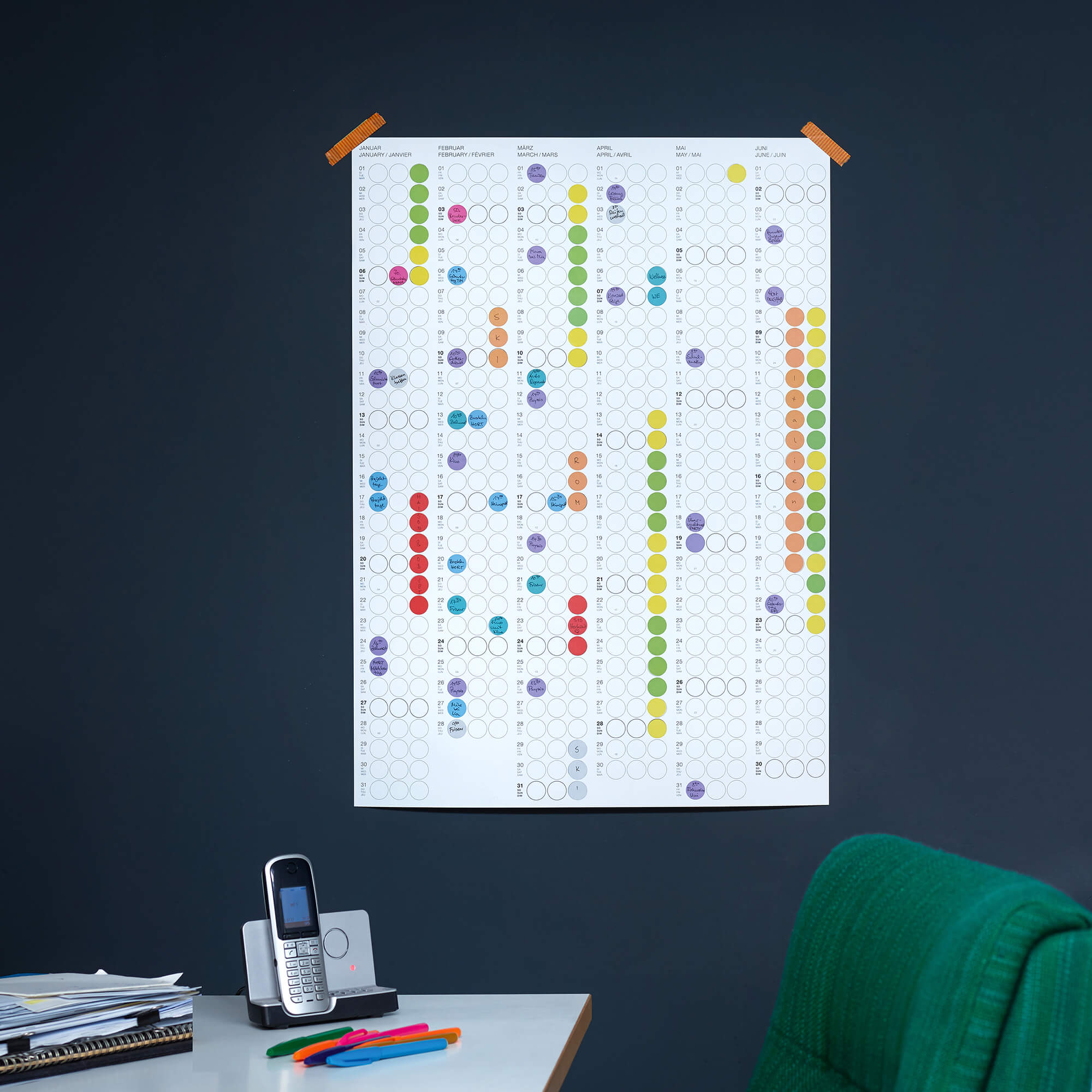
A color-sorted, tactile calendar fundamentally changes planning.
It shows:
- how full a week really is
- where appointments cluster
- where there is still room
- where limits are reached
One glance is enough – and you understand your daily life.
Colors help create clarity
With colors, planning becomes intuitive:
🔴 Work
🟢 Family
🔵 Free time
🟡 Me-Time
🟣 Projects
Suddenly you realize:
- Is my daily life in balance?
- Am I neglecting my own time?
- Where does stress arise?
This is hardly possible with simple lists.
The most important rule: Plan less – but better
Good planning doesn't mean fitting everything in.
Rather: consciously deciding what gets space
This also means:
- Crossing things out
- Leaving room
- not making everything possible
Because real relief doesn't come from more planning –
but from better planning.
Conclusion: Planning should support you – not overwhelm you
If planning doesn't work, it's rarely your fault. It's the system.
Good planning:
- creates clarity
- reduces stress
- makes boundaries visible
- helps with decision-making
And sometimes, it all starts with a simple change: making things visible.
Would you like to experience planning anew?
With a color-sorted calendar and adhesive dots, your planning becomes visible, understandable – and finally relieving.


